
Menu
Explore the legal risks of B2B customer acquisition — from purchased email lists and web scraping to AI-powered bulk outreach. Learn why "internal use only" is no defense, and how compliant signal-based outreach is reshaping global B2B growth.
Fatdun Master
August 12, 2026
Portal: https://dashboard.sifted.network
While refining our overseas B2B outreach and customer acquisition systems recently, I revisited a critical yet widely overlooked question: Do we actually have the legal right to contact a potential client?
Most practitioners hold a simplistic view: I find a corporate email and send a business outreach email. No fraud, no harassment — what could possibly go wrong?
A full breakdown of the operational and compliance chain tells a very different story. Today’s B2B customer acquisition is no longer purely manual. It has evolved into a fully automated workflow:
Data Collection → Enterprise Identification → Contact Profiling → Signal Analysis → AI Evaluation → Automated Outreach → Intelligent Nurturing
With extensive automation and AI intervention, the risks go far beyond spam emails. They cover a comprehensive set of compliance concerns:
Legitimacy of personal data processing
Lawfulness of data sources
Compliance of data usage purposes
Risks of third-party data sharing and cross-border data transmission
Compliance of automated decision-making and AI bulk outreach with local marketing regulations
Soundness of email unsubscribe and user opt-out mechanisms
Standardization of data storage and deletion protocols
Liability definition for AI Agent data processing
This reinforces a core belief: The ultimate competition in B2B growth is no longer about who can source more leads, but who can efficiently unlock high-precision business opportunities while remaining fully compliant.
This is the core philosophy behind building AI overseas growth tools like Sifted Network. Instead of merely scraping more contact details, the product focuses on identifying prospects and partners with legitimate business justification for outreach.
Years ago, I first realized that B2B outreach carries tangible legal risks, after receiving a legally formal warning email from a Harvard Law School professor. I no longer recall the exact U.S. email privacy statute involved, but the experience completely reshaped my approach to overseas outreach.
Before that incident, I shared the common industry mindset: legitimate business development emails constitute no violation. Afterwards, I adopted extreme caution for B2B outreach targeting the U.S. and European markets.
The core risk of overseas outreach is never “spam classification”, but a fully traceable compliance chain:
Lawful source of client contact information
Valid legal basis for data possession and usage
Compliance of data scenarios and purposes
Complete cessation of outreach upon explicit user opt-out
Full traceability and documentary evidence of the entire data and outreach lifecycle in case of complaints
Therefore, scalable and automated B2B outreach is viable only with a solid legal safety boundary. The widespread adoption of AI-powered customer acquisition has made this compliance framework more critical than ever.
The most overlooked compliance checkpoint in B2B overseas outreach is data source legitimacy.
Many practitioners confuse two entirely distinct behaviors:
1. Manually viewing individual public profiles and job information on LinkedIn
2. Using scraping tools to bulk harvest names, job titles, emails, and phone numbers of tens of thousands of users for internal database storage
Though both seem to utilize “public information”, they carry vastly different legal risks and compliance implications.
Key Principle: Publicly accessible information does not grant unlimited rights to scrape, database, or commercially utilize it.
Conversely, it is also inaccurate to claim that scraping public data is always illegal. Compliance depends on five critical questions:
What is the original scenario and purpose of the data being publicized?
What legitimate grounds do we have for data collection?
What specific purposes will the data serve?
Is there a reasonable connection between our usage and the original public scenario?
Does the scope of collected data exceed business necessities?
These questions matter far more than debating whether scraping is permissible.
This is one of the most prevalent compliance fallacies in B2B customer acquisition. Many companies assume emails published on official websites are fully public and free for commercial use. In reality, two types of corporate emails carry completely different compliance attributes:
1. Generic business inboxes: sales@company.com (public corporate communication channels)
2. Individual role-based inboxes: john.smith@company.com (directly linked to a natural person and classified as personal data)
Under the privacy regulations of most jurisdictions, publicly displayed individual corporate emails remain categorized as personal data and are not exempt from privacy protection rules.
Standard B2B data management should never be limited to simple “company + email” records. It requires a complete compliance dimension system:
Corporate Information → Business Contact Profile → Data Source → Usage Purpose → Usage Restrictions
What enterprises need to govern is not isolated email addresses, but the entire lifecycle of data processing.
Many companies purchase B2B databases for lead generation, relying on a dangerous assumption: purchased data is fully authorized for commercial use. This is a high-risk compliance mindset.
Data procurement only grants access to a data file from a vendor. It does not resolve three fundamental compliance issues:
Does the data vendor hold legitimate qualifications and rights for data collection and distribution?
Do we possess legal authorization to use the data for commercial marketing and outreach?
Are we obligated to notify and obtain consent from the individuals behind the data?
Enterprises purchasing B2B data must obtain clear answers to the following questions. Otherwise, they only acquire high-risk CSV files instead of compliant, sustainable data assets:
What are the original source and collection methods of the data?
What compliance credentials and traceable proof does the vendor provide?
Is the data authorized for direct marketing?
Does the dataset include valid opt-out and suppression lists?
Does the data involve cross-border transmission, and is it fully compliant?
What are the standardized data retention and deletion cycles?
How to process user data deletion and opt-out requests in a closed-loop manner?
This is a common pitfall for tool providers and outreach teams. Many believe: We do not sell or disclose data; we only use it internally, so no compliance risks apply.
This is incorrect. Global personal data regulations define data processing comprehensively to include collection, storage, usage, processing, and transmission.
Even without external data sales, all the above activities constitute regulated data processing. AI-powered automated outreach involves compliance touchpoints across the entire workflow:
Data Collection → Data Cleansing & Enrichment → Tagging & Classification → AI Analysis → Contact Profiling → Target Screening → Automated Outreach → Response Recording → Secondary Nurturing
Therefore, the core barrier of AI outreach tools is not automatic messaging capability, but the compliance, rationality, and traceability of AI-driven data processing.
The biggest mistake in global B2B outreach is applying a single set of rules worldwide. Electronic marketing and data privacy regulations vary drastically across regions and cannot be copied indiscriminately.
1. United States: Governed primarily by the CAN-SPAM Act, which enforces strict requirements for authentic sender information, valid subject lines, physical mailing addresses, and unsubscribe mechanisms. B2B commercial emails are not inherently exempt from regulation.
2. Europe: Subject to dual constraints of the ePrivacy Directive and GDPR, with refined variations among member states and extremely high compliance thresholds.
3. United Kingdom: Distinguishes between corporate and individual marketing rules, but personal data rules still apply to natural person information including names, phone numbers, and individual email addresses.
Compliant global B2B outreach requires comprehensive evaluation across five dimensions:Region × Data Type × Outreach Channel × Usage Purpose × Recipient Type.
Manual outreach has limited daily sending volume, restricting the impact of individual compliance errors. AI automation boosts efficiency by orders of magnitude — and scales risks equally fast.
An AI Agent can analyze 100,000 enterprises, screen 50,000 potential contacts, assess purchasing intent, generate personalized content, deploy bulk outreach, and execute intelligent follow-ups within a single day.
Meanwhile, all compliance loopholes are systematically amplified:
Non-compliant raw data leads to large-scale invalid and unlawful outreach
Unregulated data sources trigger widespread compliance exposure
AI continues automated outreach to users who have explicitly opted out
Flawed AI model judgments result in mass irrelevant marketing delivery
Accordingly, the key benchmark for a mature AI outreach product is a robust built-in compliance control layer.
Compliance should be embedded into the underlying architecture of AI growth products, not treated as a post-event remedy. A standardized, actionable compliance system requires five core capabilities:
Full traceability and auditability for every contact record, including data channel, collection timestamp, source type, original URL, and vendor information. Every data point can clearly answer where it originated.
Beyond storing basic contact details, the system records the legitimate business basis for prospect inclusion: executive job role, event participation, new product/purchase announcements, public inquiries, and business consultations. It builds strong linkage between data, scenarios, and usage to eliminate groundless outreach.
Document the legal basis for each data record, including user consent, legitimate interest, public availability, existing customer relationship, and other applicable justifications. The system does not autonomously validate compliance but provides complete records for tracking, auditing, complaint defense, and risk control.
Critical risk prevention mechanism: user opt-outs trigger global blacklist inclusion instead of mere single-record deletion. This eliminates repeated AI scraping and secondary harassment, achieving permanent system-wide outreach cessation after a single refusal.
Manual review is mandatory for high-risk data, sensitive scenarios, large-scale automated outreach, and bulk personal data processing. AI handles discovery, analysis, and opportunity recommendation, while final execution control remains human-governed to prevent blind full automation.
Chinese enterprises conducting overseas AI outreach commonly operate complex cross-border data pipelines: domestic data collection and storage, U.S.-based AI APIs, European email service providers, U.S. CRM systems, and overseas outreach platforms.
This transcends simple overseas emailing and triggers compliance obligations for cross-border personal data transfer and offshore data processing.
The underlying logic of global AI outreach products is clear: Data architecture equals legal architecture. Product design must explicitly define data flow, access permissions, retention cycles, deletion protocols, and the roles of data controllers and processors.
Traditional outreach follows a simplistic workflow: purchase database > import tools > template bulk sending > response rate statistics.
Compliant modern outreach requires seven pre-execution validation questions:
Who is the outreach target, and what is their core identity and business scenario?
What legal grounds support our possession of their data?
Are the data’s original source and collection methods compliant?
Is the current commercial usage legally permissible?
Do outreach channels comply with local regulations?
Can we guarantee permanent outreach cessation upon user refusal?
Can we provide full-chain compliance evidence in case of complaints?
This forms the B2B outreach data validation system: not merely proving data ownership, but fully justifying lawful possession and scenario-based usage rights.
Email database scraping and contact sourcing have become commoditized, offering no long-term competitive barriers. The true core value of B2B growth lies in business signal mining.
Genuine sales opportunities derive from dynamic corporate behaviors:
New product launches and new market expansion
Hiring local teams and building regional channels
Participation in industry summits and exhibitions
Issuing procurement and supplier recruitment demands
Securing financing and opening new branches or stores
Seeking channel partnerships and KOL collaborations
Community consultations, business inquiries, and official website updates on products and partnerships
Static contact information holds no scarcity. Dynamic business intent signals are the fundamental basis for precise outreach.
Quality B2B outreach is never “I have your contact, so I send ads”. It is “I identify your active business demand and deliver targeted solutions”.
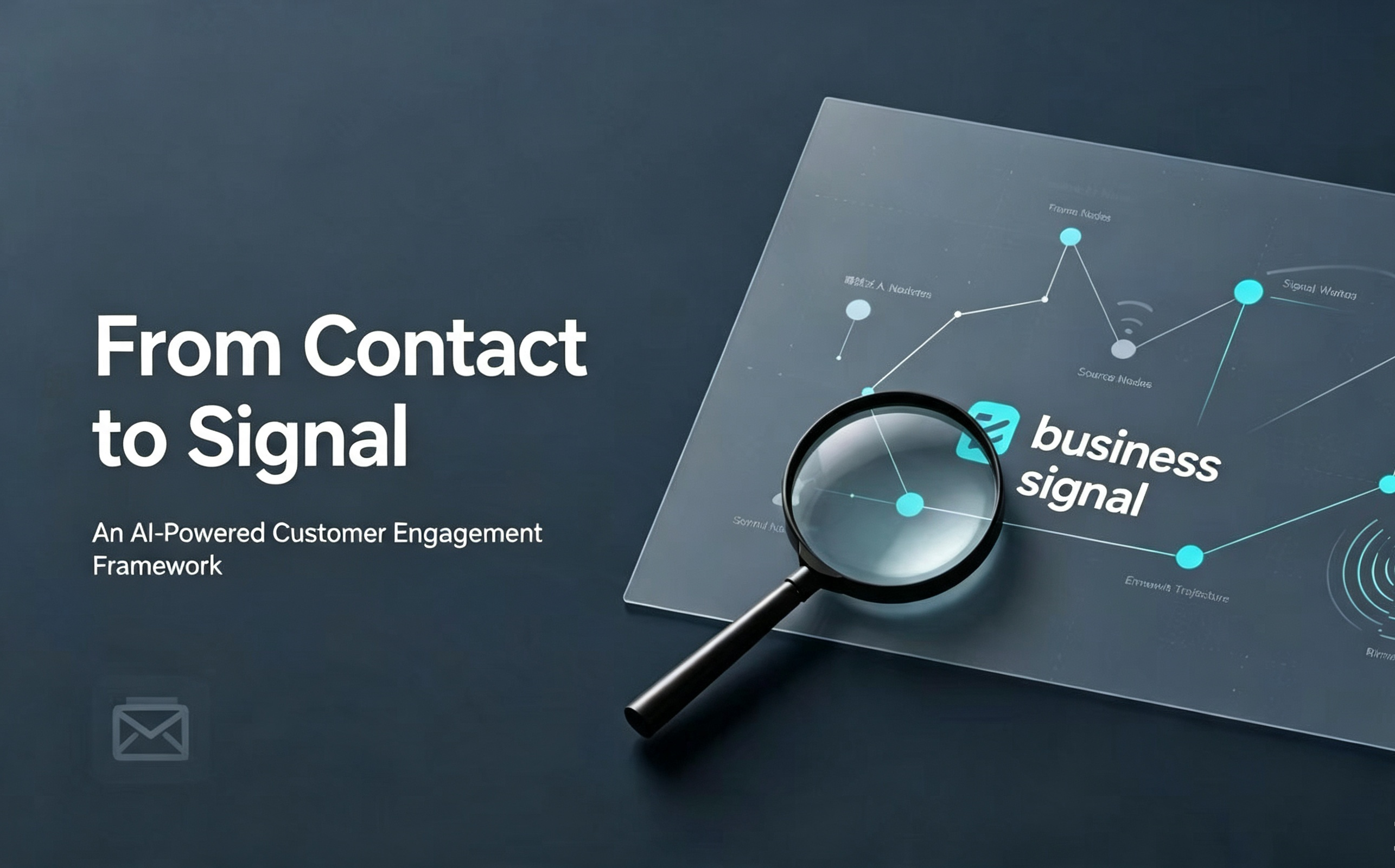
Most mainstream tools focus on contact scraping and automated bulk outreach — fully homogenized capabilities. Sifted Network adopts a fundamentally different logic: leveraging AI to continuously analyze overseas market dynamics and uncover genuine business opportunities from market changes.
Core workflow: Business Signal → Business Opportunity → Compliant Action
Eliminating the traditional flawed model: Database → Email → Spam Outreach
The AI role is upgraded from a simple auto-sending robot to a Business Growth Agent, integrating opportunity mining, demand analysis, compliance verification, and precise outreach — with compliance checks embedded into every operational step.
Future overseas B2B customer acquisition will evolve through four progressive stages:
1. Contact-based Outreach → 2. Signal-based Outreach → 3. Intent-based Outreach → 4. AI Agent-driven Compliant Outreach
Complete compliant growth workflow:
Business Signal → Scenario Interpretation → Opportunity Evaluation → Precision Contact Matching → Compliance Verification → Human-AI Review → Personalized Outreach → Intent Nurturing → Opportunity Conversion
This model eliminates blind bulk messaging and enables high-quality, scalable, compliant long-term growth.
AI automation itself is not the source of compliance risks. Blind automation without compliance awareness and risk control systems is the real hazard.
Full AI transformation is inevitable for B2B customer acquisition. High-value long-term products do not pursue more and faster AI sending, but enable AI to target more accurately, outreach more reasonably, and operate with fully compliant traceability.
The future of overseas B2B growth no longer relies on amassing massive contact databases, but on continuously miningcompliant, demand-driven business opportunities.
Interpret the market and capture signals first, then evaluate value and execute compliant outreach. This is how AI Agents reshape modern B2B overseas customer acquisition.
Disclaimer: This article provides general compliance framework insights on B2B data and marketing outreach and does not constitute legal advice for specific countries, scenarios, or business operations. Practical implementation requires dedicated legal assessment based on target market regulations, data types, outreach channels, and business models. WeChat: 956771470
© 2026 Sifted Network. AI-powered Business Development Network.